
We’re constantly hearing the term self-care on every corner of social media. Oftentimes, the term is used to describe rituals that aren’t exactly relatable… like spending hours cooking nourishing meals, always getting extensive exercise daily, having a two-hour bedtime routine, or going to the spa.

Lucky for you, I’m here to tell you that “self-care” does not have to be reflective of what you have been seeing on TikTok and Instagram. I mean, it’s hard watching these “self-care routines” that are often highly excessive, because they can easily make you feel like you aren’t doing enough to care for yourself.
But self-care does not have to be complicated, time-consuming, or expensive to be effective. Don’t get me wrong, there are benefits to some of these longer self-care rituals—especially those that focus on nutrition and fitness—but that’s a story for another day.
Today, we’re going to be focusing on seven self-care habits that are extremely simple to implement into your daily routine!

If you’re ever feeling like you want to do more to take care of yourself, but don’t know where to start, beginning with these 7 easy habits is the perfect way to go.
1. 5-Minute Morning Reset
The way that you start your morning is crucial, as it sets the tone for how the rest of your day will play out. It’s tempting to wake up and automatically start scrolling through social media…then before you know it, you’ve been lying in bed for an hour.
To start your day off right, turn off your alarm, but refrain from opening your phone right away. Instead, splash some water on your face to wake yourself up (or do your full morning skincare routine if you wish). And before reaching for the coffee pot, make sure you drink water.
Drinking water first thing in the morning has several benefits, including fueling your brain, fighting off dehydration, protecting your teeth from being stained by coffee, and reducing the chances of caffeine crashes. Reaching for coffee first thing in the morning may also irritate the stomach lining, which can lead to several negative side effects, like indigestion, bladder infections, and heartburn.
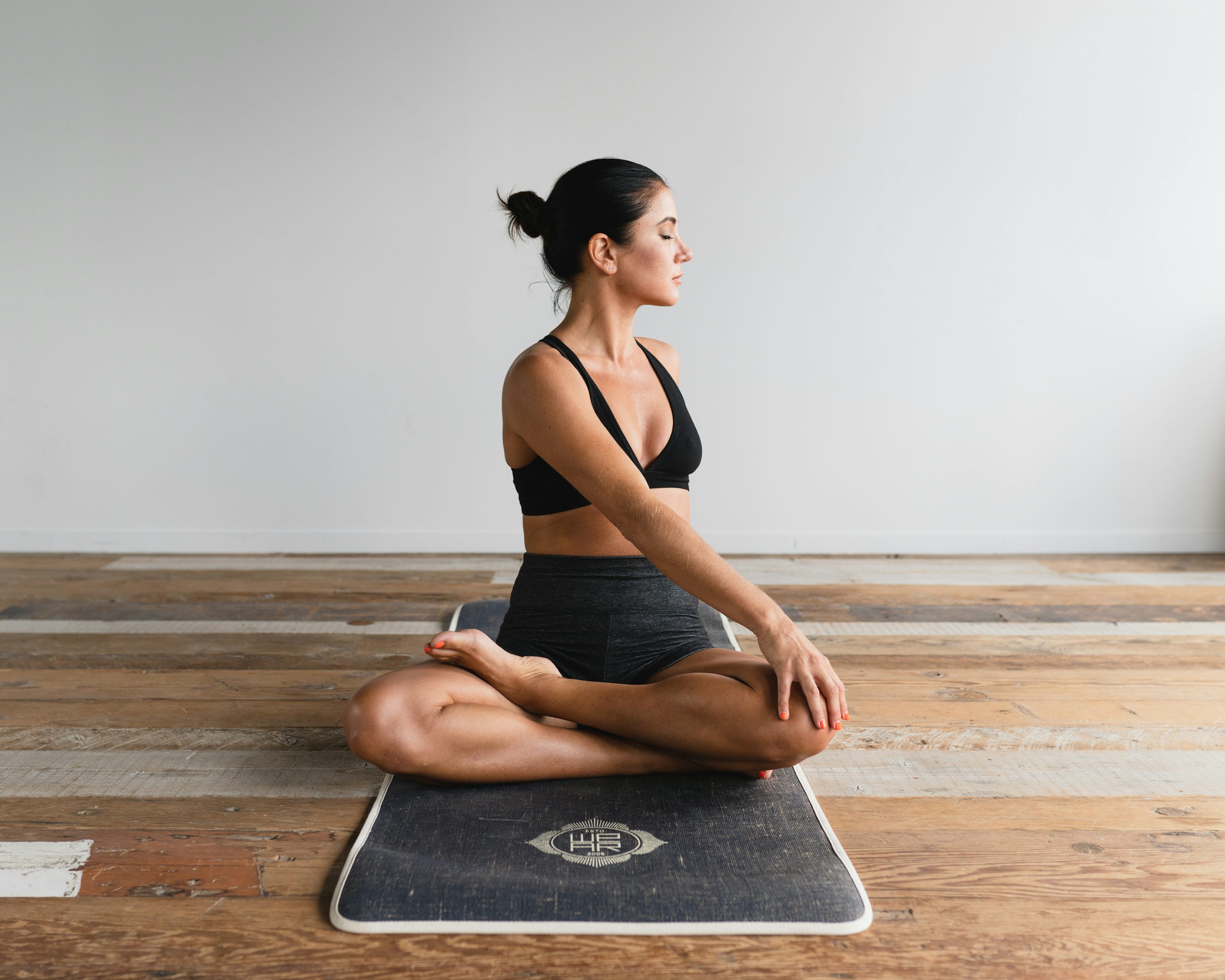
With the extra couple of minutes you have, do something else that doesn’t involve reaching for your phone. Read a couple of pages of that book you’ve been meaning to get to, grab your journal and write out three intentions you have for the day, or even do some light stretching.
Trust me. You will be surprised how good you will feel after starting your morning off in a way that is healthy for both your mind and body.
2. Daily 10-Minute Mental Health Walk
It can be mentally taxing to think about how to achieve your 10,000-step goal on busy workdays. Now, I am not dismissing the benefits of going on long walks and getting your steps in. However, everyone needs to start somewhere.
Research shows that walks for as short as 10 minutes can improve circulation, increase energy, build endurance, and increase confidence and mood. The reason we’re sticking to 10 minutes is that it is too easy to say no to. That is, it can be completed before work, after work, before bed, or even on your lunch break.

If you feel like walking for longer–great! Walking for 30 minutes, or even an hour, will only make the benefits more substantial. But, all I am asking you to stick to is 10. The point of this walk is not to speed up weight loss or reach a step goal–it is to improve your mental health by committing to a goal that is well within reach.
Start walking for 10 minutes a day, and watch how your mental health transforms!
3. Tidy Up The Mess While Listening to a Podcast
Have you ever looked at your lengthy to-do list, dwelling on everything that needs to get done, only to look around at your space to realize that it is a complete and utter disaster? Hey, we’ve all been there. And when things look like a mess, we feel like a mess, and it makes things much harder to get done.
Psychological research suggests that a tidier space can lower stress and anxiety, boost productivity, and inspire creative ideas. Notice how I’m using the word “tidy” as opposed to “clean”. This is because I’m not asking you to deep clean your bathtub, take out the vacuum, or dust off your old picture frames.
Yes, these things do need to be done–eventually. But for now, our focus is on little tasks that can be completed relatively quickly and can make us feel a little bit better throughout the day.

So what does “tidying up” mean? It means anything that shouldn’t be there (or that doesn’t look great there) should be put away. Just opened a couple of Amazon packages and left the boxes on the floor? Pick them up and bring them to the recycling. Did you leave clothes on the floor after trying outfits on last night in a rush? Put them in your hamper. Plates on your bedside table? Put them in the dishwasher.
Long story short–make your space more visually appealing without doing any hard work. Making your bed can also help you to achieve this.
Now, in the short time that it takes you to complete this task, whether it be 10 minutes or 30 minutes, turn on an informative podcast. Why a podcast and not music? Well, podcasts are like a cheat code for those of us who want to learn but feel like we don’t have the time to devote to reading a physical book. Putting a podcast on is a great way to make a strenuous task more bearable, while also stimulating your mind.

Some of my favourites are:
- Rich Habits Podcast (Finance)
- The Unf*ck Your Fitness Podcast (Health & Fitness)
- The Mel Robbins Podcast (Self-Improvement)
- Speaking of Psychology (Psychology)
Try it out, even for one day, and see how much better you feel. Before you know it, this simple self-care habit will be implemented into your daily routine.
4. Clean Up Your Social Media Feed
The world is a crazy place right now, and we are constantly exposed to it every second of every day. News consumption isn’t the same as it was back in the day. Rather than exclusively being exposed to news stories via newspapers and TV, social media has provided a means for constant exposure to current events.
Frequent news consumption has actually been linked to several health issues, such as higher cortisol and elevated blood pressure. Additionally, according to Niels Bohrmann, it is important to recognize that the journalism industry is focused on making a profit. That is, stories are intentionally worded and designed to keep us hooked.

I’m not saying that it isn’t important to be informed about what is going on in the world. Rather, the issue is with the degree of exposure we are getting. The same thing goes for viewing social media posts of models and influencers. Back in the day, all you had to do to limit your exposure to gorgeous models was to avoid looking at fashion magazines at the grocery store checkout.
Now, with Instagram and TikTok, it is almost unavoidable! It can take a serious toll on your self-esteem to constantly be looking at photos and videos of models and influencers who you perceive to be more desirable (or live a more desirable lifestyle) than yourself.

This is why cleaning your social media feed is crucial. What do I mean by cleaning? Unfollow accounts on Instagram, X, and TikTok that you think are hurting your self-esteem. Instead, follow accounts focused on personal growth and wellness. The same goes for news content that you feel may be stressing you out. Thankfully, TikTok has a “Not Interested” button that you can use to your advantage.
Whenever you see content that isn’t serving you, use this button to clean up your algorithm. And when you see videos that you find positive, inspiring, or motivating, like and save them! Soon enough, you will have fixed your social media so that it uplifts you, rather than bringing you down.
5. Swap Out Junk Food for Healthy Snacks
Look, a treat once in a while is totally fine! But when every snack you reach for throughout the day is either ultra-processed or loaded with sugar, it can have a detrimental effect on how you feel. In the long term, snacking on junk food has been linked to depression and anxiety via chronic inflammation.
In the short term, foods that are high in sugar can result in a sharp crash in blood sugar levels, which may contribute to both irritability and fatigue throughout the day. This alone should be more than enough to convince you to start opting for healthier snacks.

If not, you should make note of the gut-brain connection. That is, the consumption of unprocessed, whole foods has been linked to a healthier gut microbiome, which leads to better mental health! I recommend that all of you check out these five simple grocery staples for gut health and this list of 40 high-fiber foods. Swapping your junk food out for foods from these lists is the perfect way to show yourself the self-care you deserve.
6. Read 10 Pages a Day
Now, this goal may seem so minuscule that you may view it as pointless. But, this is simply not the case. Although reading ten pages a day may not seem like a lot, 10 pages a day is 70 pages a week and 280 pages a month! By the end of the year, sticking to this simple goal would have allowed you to finish reading 12 books.
For those of you that already read a lot, this may not seem like much. But for those of you who have been struggling to pick up reading again, this is an amazing place to start.

If you still feel like this goal may be too hard to commit to, start smaller, even if it’s just 5 pages a day. With time, you may start to feel like you want to read more and more, allowing you to increase your goal at your own pace! The main objective here is to take a few minutes out of your day to do something that nourishes your mind, allowing you to make baby steps toward self-improvement.
7. Bedtime Gratitude Journaling
Reflecting on the things we are grateful for is an excellent way to end your day. This gratitude exercise could be done mentally if you wish, but I definitely recommend writing your thoughts out on paper (i.e., either in a gratitude journal or regular journal).
How you complete this exercise is completely up to you. What works best for some may not necessarily be the best for others. For instance, what I like to do is write out three daily personal wins that I am grateful for. On my best days, I might write things down like: “I received an A+ on my psychology paper.”

Things get tricky on our days that maybe didn’t go as well–days where you are struggling to think of things you accomplished or things that made you happy. What makes this exercise so effective is that you have to think of three things, regardless of how your day went. For example, something as simple as: “I listened to my body, and allowed myself to rest because I felt tired” is really all you need.
By looking for “wins” and things we are grateful for, even on bad days, we are restructuring our thought processes to look for the positive attributes of our day. Trust me–this exercise will leave you going to sleep in a much better mood.
A Final Note
At the end of the day, self-care isn’t about perfection. It’s not about having the “right” products, the fanciest routines, or living up to a wellness aesthetic you’ve seen online. It’s about tuning into your own needs—mental, physical, and emotional—and making small, consistent choices that support your well-being.
These seven habits aren’t meant to overhaul your life overnight. They’re gentle nudges, small but meaningful steps that can help you feel a little more grounded, energized, and cared for each day. So start where you are, use what you have, and do what you can. That is self-care. 💛
You deserve it.